Chemical Products
Casting Resins for Electronic Component Encapsulation
Resins
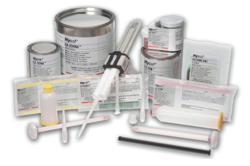
Resins used for electronic encapsulation and protection are available in a variety of chemical formulations, each offering specific performance characteristics. Epoxy resins have been widely used for many years because of their excellent mechanical strength, low shrinkage during curing, strong adhesion to a wide range of substrates, chemical resistance, and reliable high-temperature performance.
Epoxy and acrylate-based sealing and molding compounds are commonly used to protect electronic components, semiconductors, circuit boards, and electronic subassemblies. Encapsulation creates a protective barrier against moisture, dust, dirt, solvents, and other contaminants while helping shield components from mechanical stress and environmental exposure.
Epoxy resins generally provide a wider temperature range and lower shrinkage than polyurethane systems. They can also offer greater hardness, strength, adhesion, and chemical resistance. Polyurethane resins, by comparison, provide greater flexibility, elasticity, and abrasion resistance. Their ability to cure rapidly with relatively low heat generation makes them suitable for applications where thermal stress must be minimized. Specialized polyurethane formulations can also provide excellent low-temperature flexibility, low dielectric constants, and UV-stable optical clarity.
Resin systems are designed to protect and insulate printed circuit boards (PCBs), electronic components, and assemblies operating in demanding environments. By encapsulating components or filling cavities, these materials can provide a durable barrier against moisture, vibration, thermal shock, physical impact, and contamination, helping improve reliability and service life in challenging applications.
Our resin product portfolio provides access to a broad range of encapsulation, sealing, molding, and protection solutions for electronic and electrical applications. These materials are available in different formulations to meet requirements for temperature resistance, flexibility, adhesion, chemical resistance, electrical insulation, and environmental protection.